Student Wellbeing
Resilience, Rights and Respectful Relationships
At our school, we implement the Resilience, Rights and Respectful Relationships (RRRR) program to support students in developing the skills they need to build healthy relationships, manage emotions, and navigate challenges. This whole-school approach helps create a culture of respect, inclusion and wellbeing for all.
The Royal Commission into Family Violence highlighted the important role schools play in building a culture of respect to help change the story of family violence for future generations. At our school, we are committed to ensuring that every member of our community is respected, valued and treated equally.
We know that meaningful change in attitudes and behaviours occurs when respect, inclusion and gender equality are consistently modelled and embedded across the whole school. Our whole-school approach ensures that what is taught in the classroom is reinforced through everyday interactions, creating a safe, supportive and inclusive environment for all. This approach supports not only student wellbeing, but also strengthens academic outcomes, behaviour, and positive relationships between students and staff.
Through Respectful Relationships, students engage in age-appropriate learning across the following areas:
Emotional Literacy
Personal Strengths
Positive Coping
Problem Solving
Stress Management
Help-Seeking
Gender and Identity
Positive Gender Relations
For more information, visit the link below to understand how the RRRR program works, debunk common myths, explore key facts, and watch an informative video explaining what Respectful Relationships is all about:
http://www.education.vic.gov.au/about/programs/Pages/respectfulrelationships.aspx
Mental Health and Wellbeing Leader
The Mental Health and Wellbeing Leader is a teacher who works across the whole school to strengthen how we support student wellbeing. This role focuses on building staff confidence, creating clear pathways for support, and ensuring students are identified early and connected to the help they need. It is not a counselling role, but supports a proactive, whole-school approach to promoting positive mental health.
This role is part of the Victorian Government’s Mental Health in Primary Schools (MHiPS) initiative, which helps schools build a consistent and preventative approach to student wellbeing.
At Oakleigh Primary School, this means supporting teachers with practical strategies, developing clear pathways for additional support, and working with families and external services when needed. This helps ensure classrooms are calm and supportive, students learn to manage their emotions, and those who need extra help are identified early.
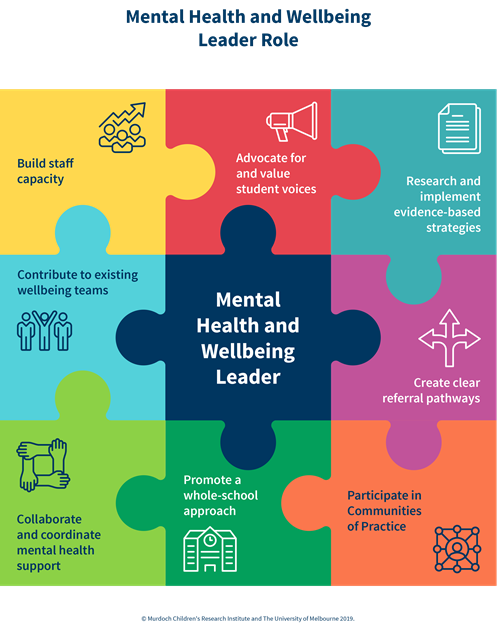
This model shows how we work together to support every child’s wellbeing, through strong relationships, consistent practices and clear supports.
School Counsellor
The School Counsellor supports students with their mental health, wellbeing and emotional needs; especially when those “big feelings” start to feel overwhelming.
Support is provided through one-on-one and small group sessions, helping students with things like friendships, school worries, and challenges at home. Counselling offers a safe and supportive space where students can talk, feel understood, and learn strategies they can use in everyday life. Students can be referred through teachers, leadership or families, with parent/carer consent required for ongoing support. Students can also access support if something arises during the school day. Support is tailored to each child, with a strong focus on understanding and respecting each student’s background, experiences and culture.
The School Counsellor works closely with Leadership and our Mental Health and Wellbeing Leader to ensure every student is supported; both through whole-school approaches and more targeted support when needed.